

The Board’s 60-Second Brief
A technology outage, an AI-enabled cybercrime campaign, and new supervisory findings point to the same concern: banks must prove their critical controls work under stress. This week’s developments reinforce the importance of operational resilience, stronger AI oversight, and protecting financial infrastructure against increasingly sophisticated threats.

1. Global Microsoft Outage Exposes Critical Technology Dependencies
November 12–13 | IT & Operational Resilience
A widespread Microsoft 365 disruption affected Outlook, Teams, Copilot, and related services across multiple regions, disrupting businesses and government operations. Recovery was progressing on November 13, although some services remained degraded. Microsoft reported no evidence of malicious activity.


2. U.S. Authorities Disrupt a North Korean AI-Enabled Cybercrime Campaign
November 12 | Cyber Heists & AI-Assisted Attacks
The U.S. Department of Justice announced the disruption of FaceStealer, a North Korean social-engineering campaign using prerecorded video and AI-generated deepfakes to compromise victims and steal more than $400 million in cryptocurrency over 18 months. Separately, authorities secured court authorization to seize or restrain more than $1.2 billion linked to the October Binance theft.


Source: U.S. Department of Justice

3. OCC’s Fall 2026 Risk Report Identifies AI, Cyber, and Financial Risks
November 12 | Banking Supervision & Risk Management
The OCC’s Semiannual Risk Perspective identified credit, market, compliance, and operational risks as major supervisory themes. While banking profitability strengthened during the first half of 2026, the OCC emphasized potential interest-rate impacts and warned that advanced AI can amplify cyber and fraud threats.

Source: OCC Semiannual Risk Perspective, Fall 2026

4. Microsoft Research Demonstrates Hidden Backdoors in AI Agents
November 10 | AI Security & Third-Party Risk
Microsoft researchers demonstrated that modifying fewer than ten neurons in an AI model could cause an otherwise normal agent to execute malicious instructions when triggered. The experimental technique, called Lazarus, illustrates AI model supply-chain risks; Microsoft has not observed criminal exploitation of this specific method.

Source: Microsoft Threat Intelligence

5. FinCEN Blocks MEXC Global From U.S. Financial Transactions
November 6 | BSA/AML, Sanctions & Digital Assets
FinCEN issued an order prohibiting U.S. financial institutions from processing funds transfers involving cryptocurrency exchange MEXC Global. The agency attributed at least $16 billion in illicit transactions to the exchange, citing sanctions evasion and cybercrime involving Iranian, North Korean, and Russian actors. This is a binding restriction, not merely a risk advisory.



Board Action This Week
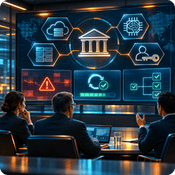
Ask management: Which critical banking functions depend on technology providers, AI systems, or privileged identities that have not been tested under realistic disruption or compromise scenarios?
Request evidence of control effectiveness, recovery testing, and remediation ownership. Prioritize risks according to potential financial, operational, and regulatory consequences.

From Intelligence to Action | Mijares Consulting
Identifying emerging risks is important. Demonstrating control effectiveness is essential.
Mijares Consulting helps financial institutions translate cyber threats, AI developments, and regulatory intelligence into practical risk assessments, control improvements, AI governance programs, and evidence-based Board reporting.
Strengthen Governance Before the Next Incident
Contact Mijares Consulting to evaluate your bank’s emerging technology risks, identify material control gaps, and strengthen governance before an incident tests those controls.
Contact Mijares ConsultingFollow us, stay informed, stay secure, and let’s navigate the risk landscape together.