


This article was developed using publicly available responses submitted to Requests for Information issued by banking regulators. It summarizes and synthesizes themes, perspectives, and information reflected in those public submissions for informational purposes only. The article does not represent the views of any regulator, respondent, institution, or the Firm, and should not be interpreted as legal, regulatory, or compliance advice.
Executive Summary

Question 13 asks whether agencies should adopt terminology beyond “could reasonably be expected” to express the probability threshold for issuing MRAs, and whether that threshold is distinct from the likelihood standard for unsafe or unsound practices. Across the record, commenters converged on foreseeability-based language and rejected “merely possible” as too low. Several responses also affirmed that the MRA threshold is a lower bar than the “likely” standard tied to unsafe or unsound practices. A slight majority did not propose alternative terms, but those who did emphasized “reasonably foreseeable” or “could foreseeably,” and cautioned against numeric probability cutoffs.
Key takeaways:

- Commenters emphasized “reasonably foreseeable” outcomes rather than “merely possible” as the appropriate basis for MRAs.
- One commenter proposed “could foreseeably” to capture elevated risk without requiring that harm be likely.
- Multiple respondents distinguished MRAs from unsafe or unsound practices, noting that “likely” is a higher bar than “foreseeable.”
- Several cautioned against numeric probability thresholds for supervisory judgments.
- Some urged clearer evidentiary support for any “likely” determinations tied to unsafe or unsound findings.
- Concerns about undefined materiality and ambiguous phrasing underscored the need for clearer standards.
Bottom line:
Use foreseeability-based phrasing, “reasonably foreseeable” or “could foreseeably”, to express the MRA probability threshold, while avoiding “merely possible.” The MRA standard should remain distinct and lower than the “likely” threshold associated with unsafe or unsound practices, without resorting to rigid numerical probabilities.

The Question (Ref #13)
Other than ‘‘could reasonably be expected,’’ are there terms that the agencies should consider to specify the probability of risk required for a practice, act, or failure to act, to be communicated as an MRA, e.g., ‘‘could possibly,’’ ‘‘could foreseeably,’’ ‘‘would’’? Is this standard sufficiently distinct from the likelihood requirement for unsafe or unsound practices so as to convey a lower bar?
Direct Response to the Catalog Question

Favor foreseeability-based language: commenters pointed to “reasonably foreseeable” and “could foreseeably” as clearer and appropriately calibrated for MRAs.

Do not adopt “could possibly”: respondents stressed that “merely possible” outcomes are too speculative for supervisory action.

Affirm distinct thresholds: MRAs can rest on foreseeable risk, whereas unsafe or unsound findings require “likely” harm, a higher.

Avoid numeric cutoffs: assigning percentages to “likely” vs. “foreseeable” oversimplifies supervisory judgments.

Anchor foreseeability in conditions: tie MRAs to “current or reasonably foreseeable conditions” to ground probability judgments.

Introduction
Question 13 asks: Other than “could reasonably be expected,” are there terms that the agencies should consider to specify the probability of risk required for a practice, act, or failure to act to be communicated as an MRA (e.g., “could possibly,” “could foreseeably,” “would”)? Is this standard sufficiently distinct from the likelihood requirement for unsafe or unsound practices so as to convey a lower bar?
Historic Lessons in the Evidence

Respondents’ reasoning repeatedly differentiates “possible,” “foreseeable,” and “likely,” with supervisory clarity improving when foreseeability is the anchor and “merely possible” is excluded. Where terms are left undefined, commenters anticipate inconsistent application and contested expectations. Several emphasized that observable pathways under reasonably foreseeable conditions and documented examiner rationale yield more reliable, durable outcomes than abstract or numeric probability targets.
The Challenge

The practical challenge is calibrating language that enables early supervisory intervention without blurring into enforcement thresholds. Commenters noted ambiguity around undefined terms (e.g., materiality), the risk of conflating MRAs with unsafe or unsound standards, and the potential pitfalls of numerical probability thresholds that may not reflect complex, condition-dependent risks.
Evolving Metrics
Respondents assessed probability through narrative criteria, “reasonably foreseeable conditions,” distinctions between “possible” and “likely,” and calls for demonstrable, quantifiable support when asserting that harm is “likely.” They cautioned that percentage thresholds (e.g., 49% vs. 51%) can mischaracterize uncertainty and undermine examiner judgment grounded in qualitative and contextual evidence.
A Framework Inspired by the Inputs
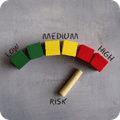
An implicit two-tier framework emerges: use foreseeability (e.g., “could foreseeably,” “reasonably foreseeable conditions”) to justify MRAs aimed at correcting deficiencies early, and reserve “likely” for unsafe or unsound determinations and enforcement actions. This approach privileges condition-based narratives over numeric probabilities and demands examiner documentation of plausible harm pathways.
Case Study
Across submissions, a representative pattern is clear: when a practice presents a documented pathway to material harm under reasonably foreseeable conditions, commenters would support an MRA (e.g., “could foreseeably”) without waiting for harm to be “likely.” As risk intensifies and crosses into “likely” outcomes, commenters align that standard with unsafe or unsound practices, reinforcing a stepped supervisory response.

Recommendations
- Adopt foreseeability-based phrasing for MRAs (e.g., “reasonably foreseeable,” “could foreseeably”) to signal a clear, actionable probability threshold.
- Explicitly reject “could possibly” as insufficient to justify MRAs, clarifying that mere possibility does not meet supervisory standards.
- Codify the distinction: state that MRAs rest on foreseeability while unsafe or unsound findings require “likely” harm.
- Avoid numerical probability cutoffs; instruct examiners to document pathways to harm under reasonably foreseeable conditions.
- Provide examiner guidance that anchors assessments in “current or reasonably foreseeable conditions,” not abstract hypotheticals.
- Require concise, evidence-backed rationales distinguishing foreseeable from merely possible outcomes in MRA write-ups.
- Clarify how undefined concepts (e.g., materiality) interact with probability terms to prevent inconsistent application.
Conclusion

Commenters generally converged on foreseeability as the right signal for MRAs and rejected mere possibility as too low a bar. They also affirmed that the MRA threshold should be distinct from and lower than the “likely” standard tied to unsafe or unsound practices. Agencies can improve consistency and transparency by adopting “reasonably foreseeable” or “could foreseeably,” avoiding numeric cutoffs, and grounding judgments in documented, condition-based analyses.
Follow us, stay informed, stay secure, and let’s navigate the risk landscape together.